The Miami Beach Architecture Behind Vice City’s Look
Start with Ocean Drive’s Art Deco hotels, then compare their shapes and lighting with Rockstar’s GTA VI trailer. Use these Miami Beach resources to follow the references yourself.
Start with a real building you can name
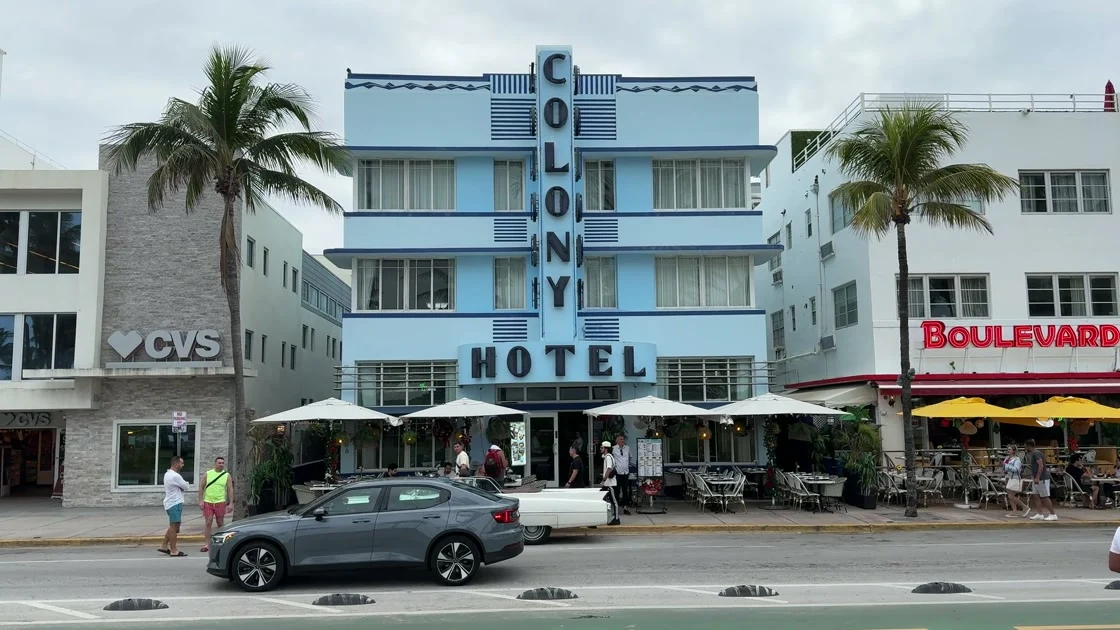
If you want to understand why GTA VI's Vice City reads as Miami Beach, look past the tropical weather. Start with the short, wide hotels along Ocean Drive. The City of Miami Beach identifies the Colony Hotel at 736 Ocean Drive as a 1935 building by Henry Hohauser. That gives you a documented address and a photograph to compare with the trailer. It also gives you a way to check what you think you saw. A blue building, a group of palms or a bright sign can look familiar without identifying a particular hotel.
The useful comparison is between how the real street is built and what the game's art team made readable. Our approach is to compare the same details in the same order. Look at building shape first, then window and sign placement, then the relation of the building to the sidewalk and street. Save lighting for last. Color changes with the time of day and how an image is graded. A building's mass and the position of its windows stay useful even if two scenes were shot at different times.
The Colony Hotel is a good first reference
Look at the cover photograph from the roof down. The shape of the central tower and the vertical sign give your eye a place to land. Horizontal strips and ledges run across the facade on both sides. Those details keep the building readable in a street shot, even when parked cars and umbrellas fill the lower edge. If you are comparing images taken from two different angles, outline the obvious vertical and horizontal forms in your head before going looking for smaller decorative details.
Try a quick exercise. Cover the text on the sign with one hand and look at the silhouette on either side. Then compare this with a frame from the trailer where a line of hotels faces the street. Look for the way a sign or tower projects above the main roofline. If the fictional scene gives you a similar rhythm but uses different windows, balconies or doors, you have an architectural resemblance you can describe accurately. A stronger building-level match needs more details working together.
Then look down at street level. The ground floor is where people enter, wait, eat or walk past. A hotel photographed straight on can look like a symmetrical object. In a moving shot, street furniture and parked cars make it a place. When a GTA shot is too quick to pin down an exact address, the relationship between the hotel and the street can still show what made the location feel like Ocean Drive.
Compare the street in Rockstar's trailer
Rockstar's first trailer is a useful starting point because it moves between skyline, beach and street views. The cuts are fast, so start by watching the whole trailer once. On a second pass, pause on exterior views where a hotel facade fills enough of the frame to compare. Use that pause to identify the main building, the street edge and the distance to whatever sits behind it. On close shots, avoid using anything outside the frame as evidence. A neighboring building you recognize in a photo might be replaced, cropped out or rearranged in a game shot.
Step 1: Look for shape before color
Find where the building steps up or drops down. Count broad groups of windows if they are visible, then compare their spacing. A smooth rounded corner versus a sharp edge can narrow a comparison. If both buildings have a raised center but the window rhythm and the ground-floor entrance disagree, let that difference count. Architecture can inspire a scene without dictating the exact footprint, proportions or address of a fictional building.
Step 2: Check where the signs sit
A tall sign along the middle of a facade, a sign above an entrance and a sign that wraps a corner each do something different in a street shot. Identify the mounting point before trying to read the lettering. A fictional place name can help identify a location within the game. To use it as a clue to the real counterpart, compare the position of the sign with window lines, corner shape and the buildings around it.
Step 3: Treat the night photo as its own evidence
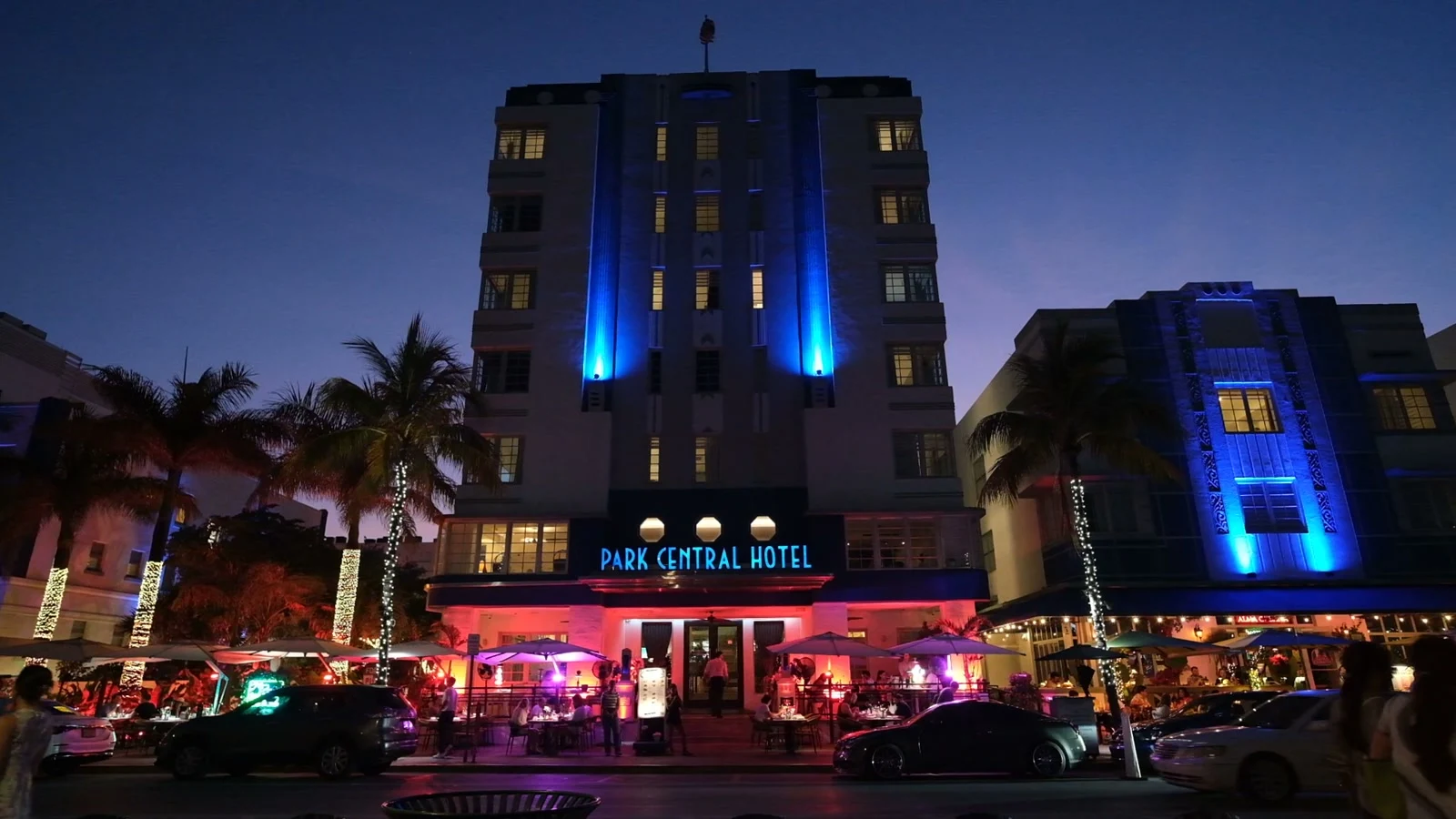
The Park Central Hotel photo shows how facade lighting changes what you can read at night. Light can make a ledge or sign stand out while windows and doors fall into shadow. When comparing it with a trailer frame, note where bright areas sit in relation to the roofline and where light falls onto the sidewalk. Look at the area around the illuminated features as well. Cinematic color can make two unrelated buildings feel similar. The fixtures and the surfaces they illuminate give you more to work with.
The coastline explains the neighborhood
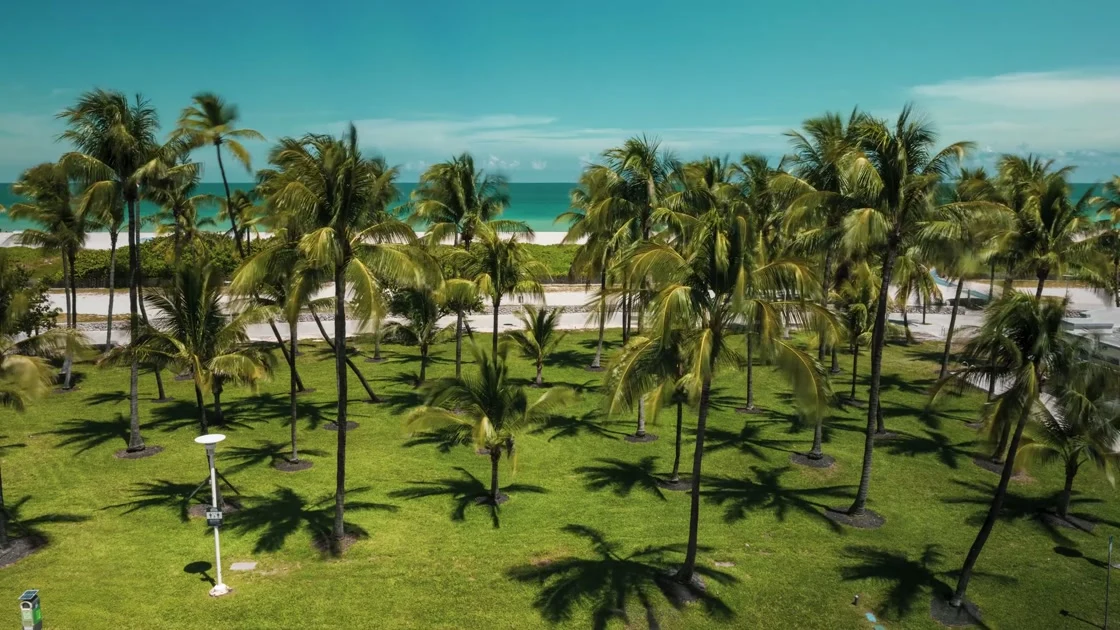
The aerial photo of Miami Beach is useful for a different reason. It shows the separation between the water, the sand, the line of vegetation and the area that is built up behind it. A beach camera can show people and palms without telling you what sits behind the first block. A wide view gives context for why the beach, street and hotels belong together in the first place. Read the coastline shot for that relationship, then go back to the close street comparison.
Pay attention to scale as the trailer changes angles. A closer lens can make a small building fill most of the screen. A wide establishing view can reveal how much space lies between the buildings and water. Compare a wide game shot with a wide reference and a street-level shot with street-level photography. If all you have is a close-up, use it to support one specific observation and leave the rest open.
How to follow this as a real-world resource guide
Start with the city's Art Deco guide if your question is about the history of a building. It provides a stable place to check names, dates and architects. Use the Miami Design Preservation League's Welcome Center if you're looking for ways to explore the district or want more context on preservation. Check the destination's own page for current hours and tour arrangements before traveling. If you're following from home, use those references with the trailer in a second tab.
When you find another possible match, write down what you compared. Save the video and time; note the visible facade, sign, corner and nearby buildings; then record the real-world source and address. A useful note could read, "The shot uses the same raised central sign and horizontal ledges you see on Ocean Drive. Doors and adjacent buildings differ." That says what the frames share and gives another viewer something they can verify. If you only wrote "it's Miami," you would have to start from scratch when someone asked which part.
If a video or still is ambiguous, keep the label broad until you have better evidence. A claim like "Ocean Drive-style hotels" still teaches the reader something about the scene. Label exact in-game locations only when the source identifies them or when the visible clues support a sufficiently specific match. Trailer footage is evidence of what appears in that trailer. It does not tell you the final route, access conditions or what a mission will let you do on a particular block.
What to watch after this guide
Use our detailed Miami comparison for the longer Rockstar preview and the connections beyond Ocean Drive. It has chapter links for downtown, Bayside and Ocean Beach. The two articles answer different questions. This guide gives you a method for reading real Art Deco buildings and their fictional relatives. The other takes specific shots in a longer video and tells you where to start. Compare both when a location resembles more than one real-world place.
For a final check, return to the cover and write down the one detail you noticed first. Then pause a matching-looking shot and find one similarity and one difference. If you keep seeing consistent choices across several locations, you have a stronger explanation for how Vice City feels like Miami. You can share that explanation with the timestamp and source, and another viewer can repeat the comparison on their own.
A route for comparing the district in person
If you visit the district, begin with the confirmed address in the city's guide. Use public sidewalks and photograph the whole building before trying to match a detail. A straight view makes the facade easier to compare. Then step back on a safe public route and include the adjacent block, since a game camera often reads one hotel as part of a row. If you're sharing the comparison, say when and where the photo was taken. A viewer should be able to look up the real building without relying on your memory of the corner. Stay in the public areas and check posted rules when taking pictures.
On a second pass, compare the same building under different light if you can do so safely. Keep the daylight photo as your shape reference and use the night photo for what is illuminated. That simple pair is more informative than chasing a single screenshot with the right color.
Keep a note you can verify later
Record the exact building name from the city's guide, its address, and one visible feature beyond color. Back at home, pull up the trailer time and compare those three notes with what the frame actually shows. Keep any uncertainty in the caption. That way a good story about architectural influence stays useful even if a more detailed preview changes your mind about a specific hotel.
Related guides and tools
- Watch the extended Vice City and Miami comparison
- Explore the real Florida locations
- Get your console ready with the GTA VI launch checklist